Forest Walks at Darts Hill Garden
These are not simply walks through the forest. Together we notice plants and learn something about their properties, listen for birdsong, look for signs of other forest dwellers, and explore the forest through all of our senses.
I am interested in practical knowledge, but also in what happens when we become more aware of, and more connected with, the other-than-human lives around us. What changes when a tree stops being scenery? When a bird call becomes a conversation? When we begin to notice who else is here?
And sometimes we follow the questions a little farther. Where did the water in this creek come from? Where has it travelled? What was it before it was water here? Cloud? Snow? Mist? Ocean? And where will it go next?
A forest can become very different when we stop moving through it as though we are the only ones having an experience.
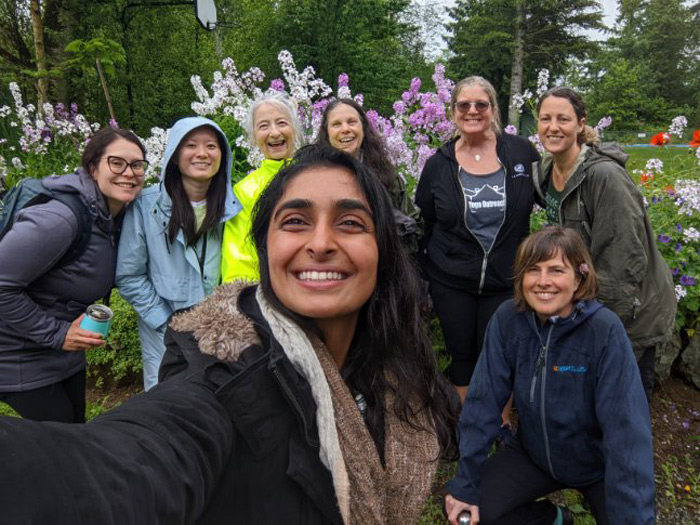
The walk becomes less about identifying what is around us and more about entering into relationship with it—plants, birds, water, soil, fungi, stones, insects, weather, and all the other lives sharing the place.
Sometimes the most interesting question is simply: Who else is here, and what happens when I begin to notice? And because we are walking together, the forest is never experienced by just one pair of eyes. One person’s curiosity opens a door for everyone else. We may stop to share what we are noticing, wonder together about what secrets that creek might be telling us, imagine the lives moving around us unseen, or listen for what the place itself seems to be asking us to notice.
That shared attention is part of the work. The walk becomes a small, temporary community of people practicing how to be more present—not only with one another, but with the many other lives already gathered there.
